ONE DAY IN
Bruges, Belgium
The next stop on my solo travels through Belgium was Ottignies-Louvain-la-Neuve, a small university town that was once part of Leuven. It’s not a typical tourist destination, but it gave me a refreshing window into everyday Belgian life — quieter, slower, and a little off the radar.
I stayed with a friend I’d met through the women’s travel group. Her daughter, who was around my age, took me out one evening and gave me a proper local night out: hopping between bars, dancing, and occasionally telling persistent (but very charming) Belgian guys that I had a boyfriend. It was fun and a bit chaotic — the kind of night that feels spontaneous and doesn’t need much planning.
The town itself was easy to get to know, with the university at its centre. At one point, a stranger even asked me for directions — something that happens more often than I’d expect. People tend to assume I’m a local, and I’ve often been spoken to in the native language. I’ve been told I have European features, which might explain it.
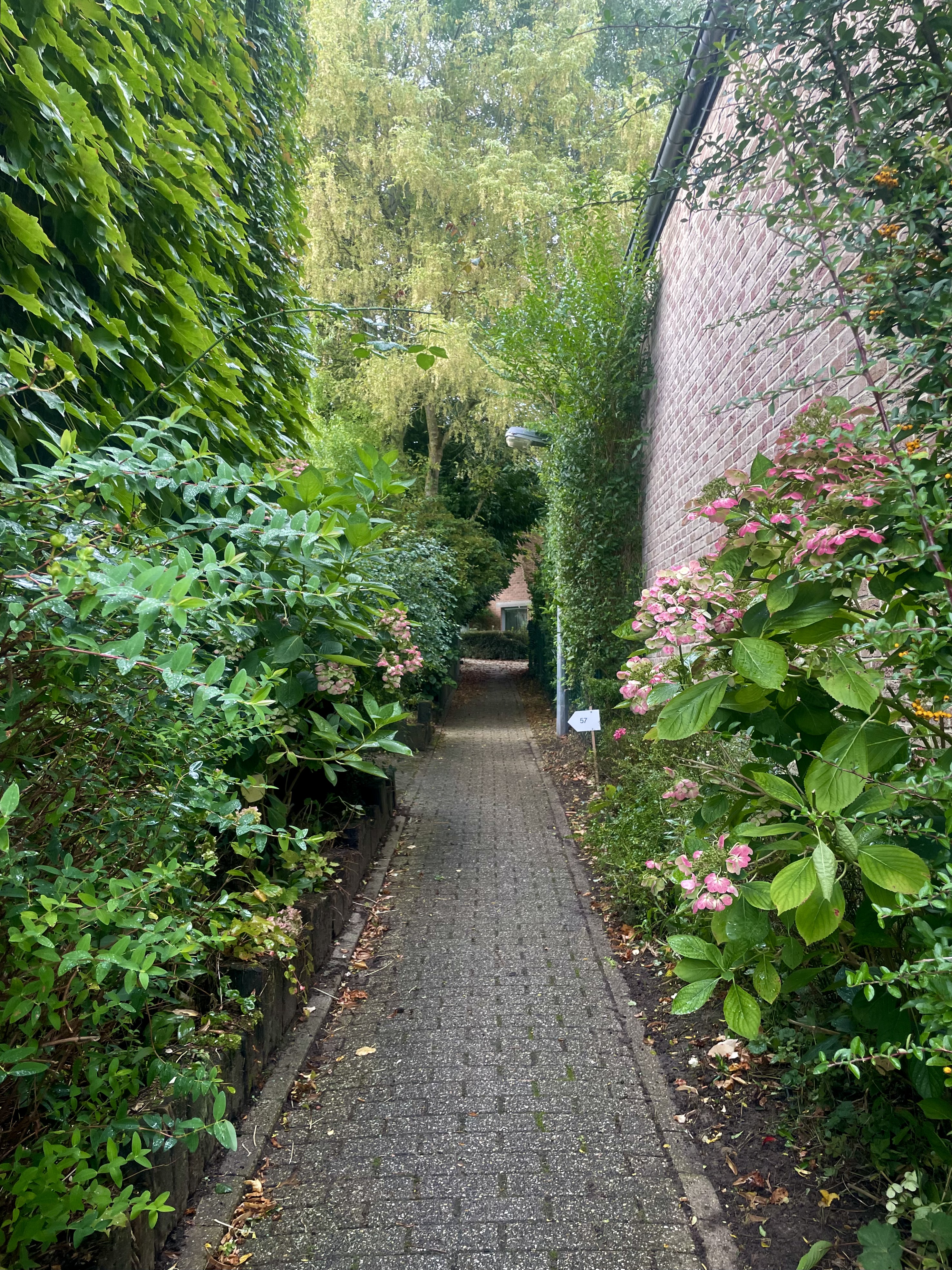

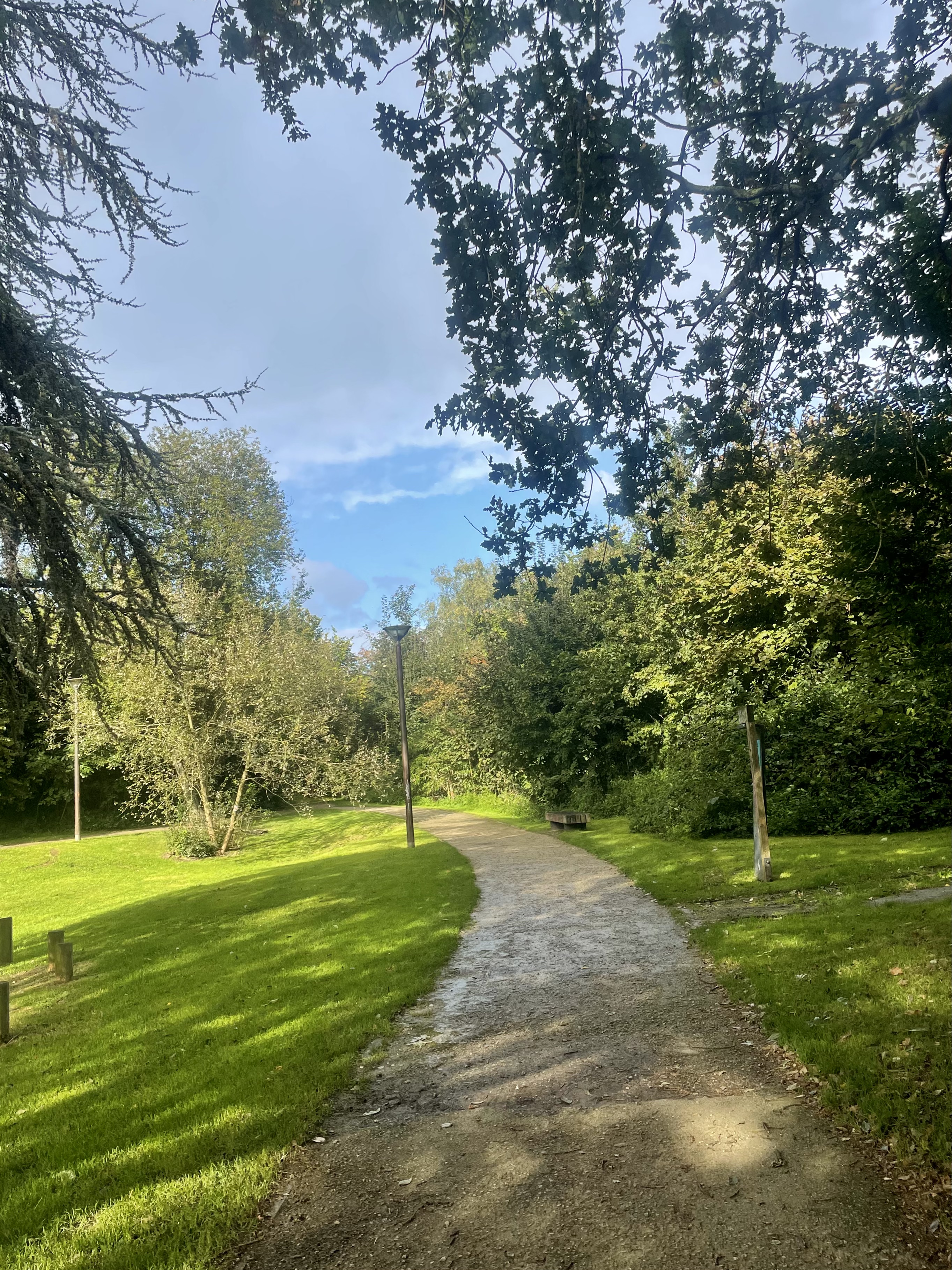
Most of my days there were quiet in the best way. I walked tree-lined paths, read in sunny spots, and wandered into small local art displays. It felt easy to unwind — a rare kind of stillness that made the days feel full without doing much at all.
My host family had two pet rabbits, and when one developed a skin issue, I was able to help out. With my veterinary nursing background, I knew how to medicate her properly. It was a small thing, but it felt meaningful to be able to give something back during my stay.


While I was in Ottignies, I had the unexpected opportunity to see Pope Francis up close during his visit to the local museum for an anniversary celebration. He was within touching distance, and being in that moment was surprisingly moving. The atmosphere was calm but charged with significance — seeing such a globally important figure in a small university town was a reminder of how extraordinary moments can happen anywhere.

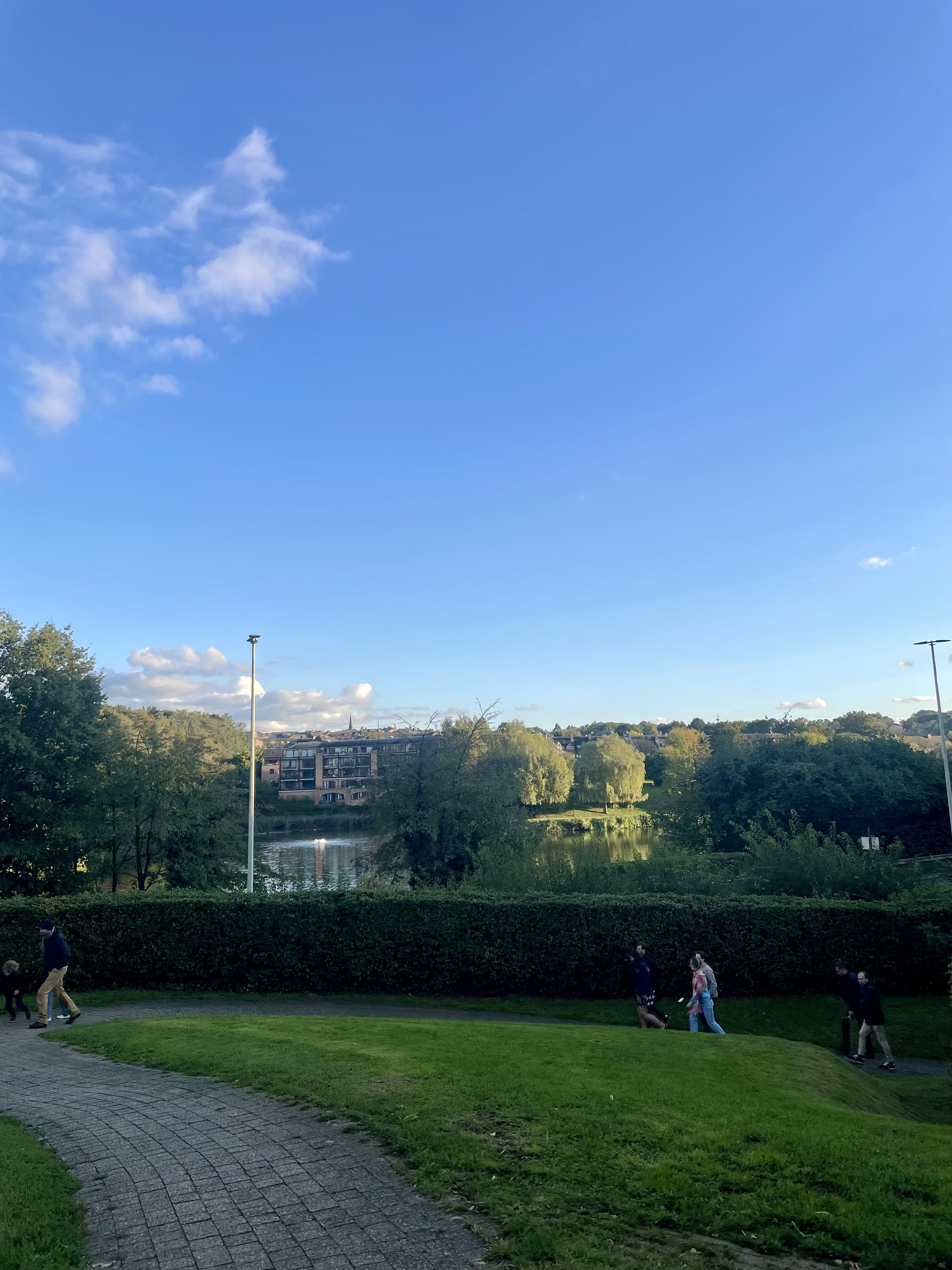
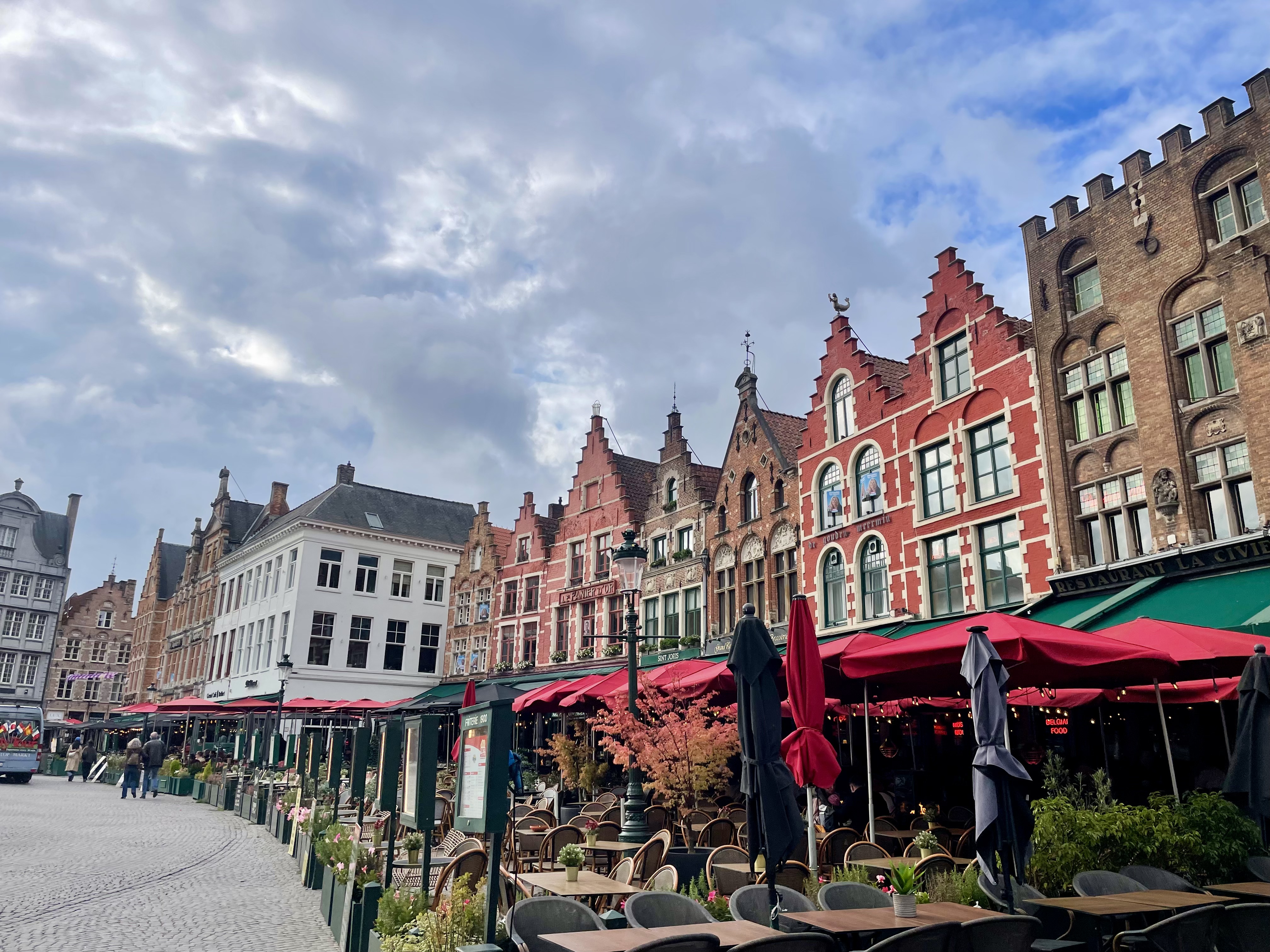
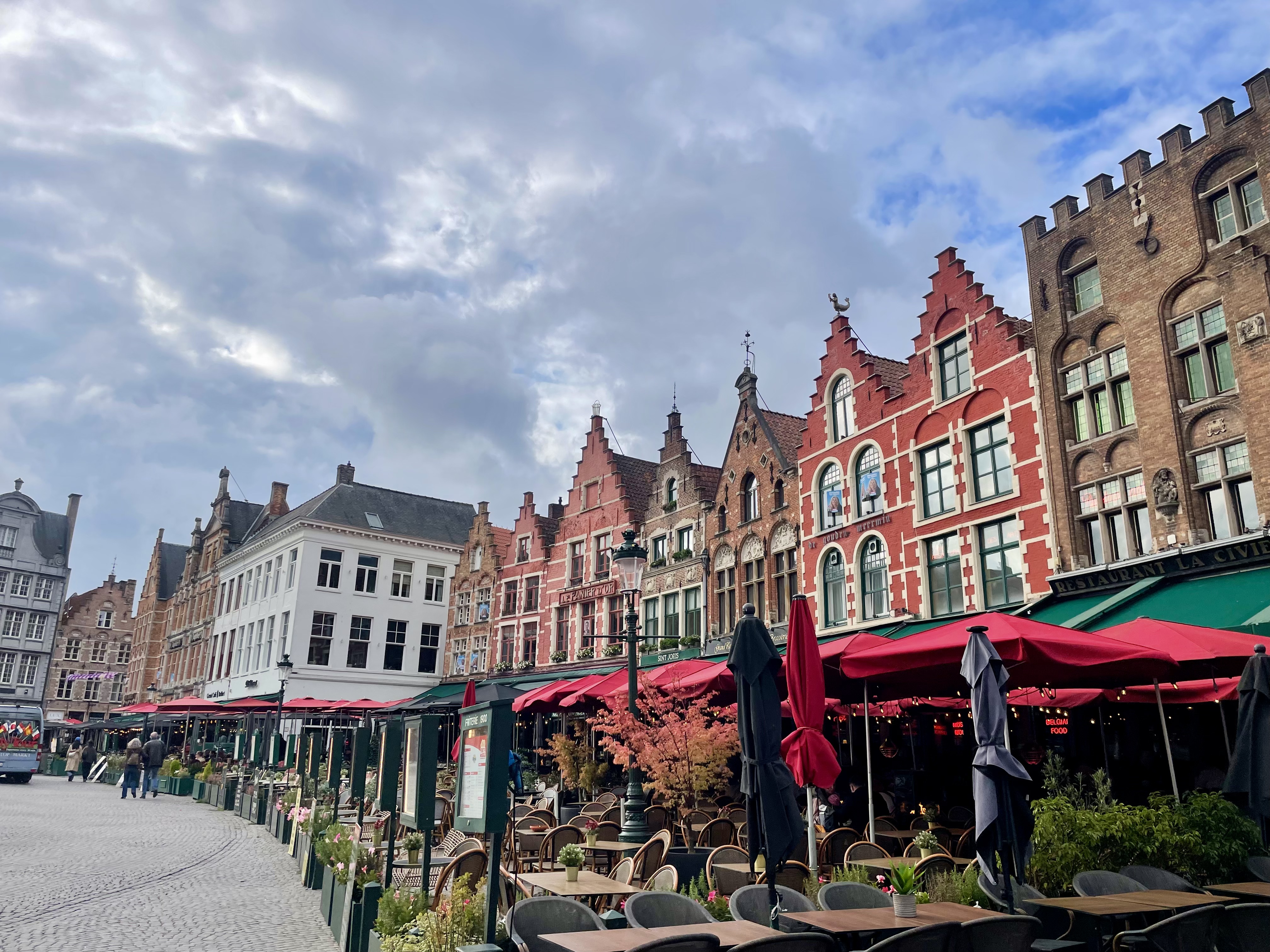
One day, I took a solo trip to Bruges — easily the highlight of my time in Belgium. It’s a postcard-perfect town, full of cobbled streets, canals, and centuries-old buildings covered in flowers. Bruges often gets called the Venice of the North, and that comparison actually holds up. It’s romantic, a little surreal, and has just enough strange legends and eerie museums to keep things interesting.


The torture museum, with its medieval devices and dim lighting, was unsettling but fascinating. It’s housed in one of the oldest stone buildings in the city — once used as a prison — and is supposedly haunted. Staff have reported objects moving on their own, cold drafts, and footsteps echoing when no one’s around. Some believe it’s the spirits of former prisoners; others think it’s just the weight of history hanging in the air. It’s not exactly a cheerful stop, but it’s a thought-provoking one — a sharp contrast to the fairytale charm outside.
Bruges is full of these contrasts. Behind its picturesque facades are stories of hauntings, disappearances, executions, and strange local folklore. I heard about the ghost of the Beguinage, where women in white are said to appear at dusk. There’s also a story about a reclusive medieval alchemist who vanished under mysterious circumstances. Some say he succeeded in achieving immortality. Others think the Devil claimed him. His house was believed to be cursed, with neighbours reporting screams and strange lights long after he disappeared.


Bruges is often described as a “fairytale town,” and while that’s true — with its medieval buildings, flower-covered bridges, and peaceful canals — it also has a darker, more complex edge. It’s one of the best-preserved medieval towns in Europe, and walking through it feels like stepping into a living museum — but one where life still happens. People still live, work, and wander these old stone streets.
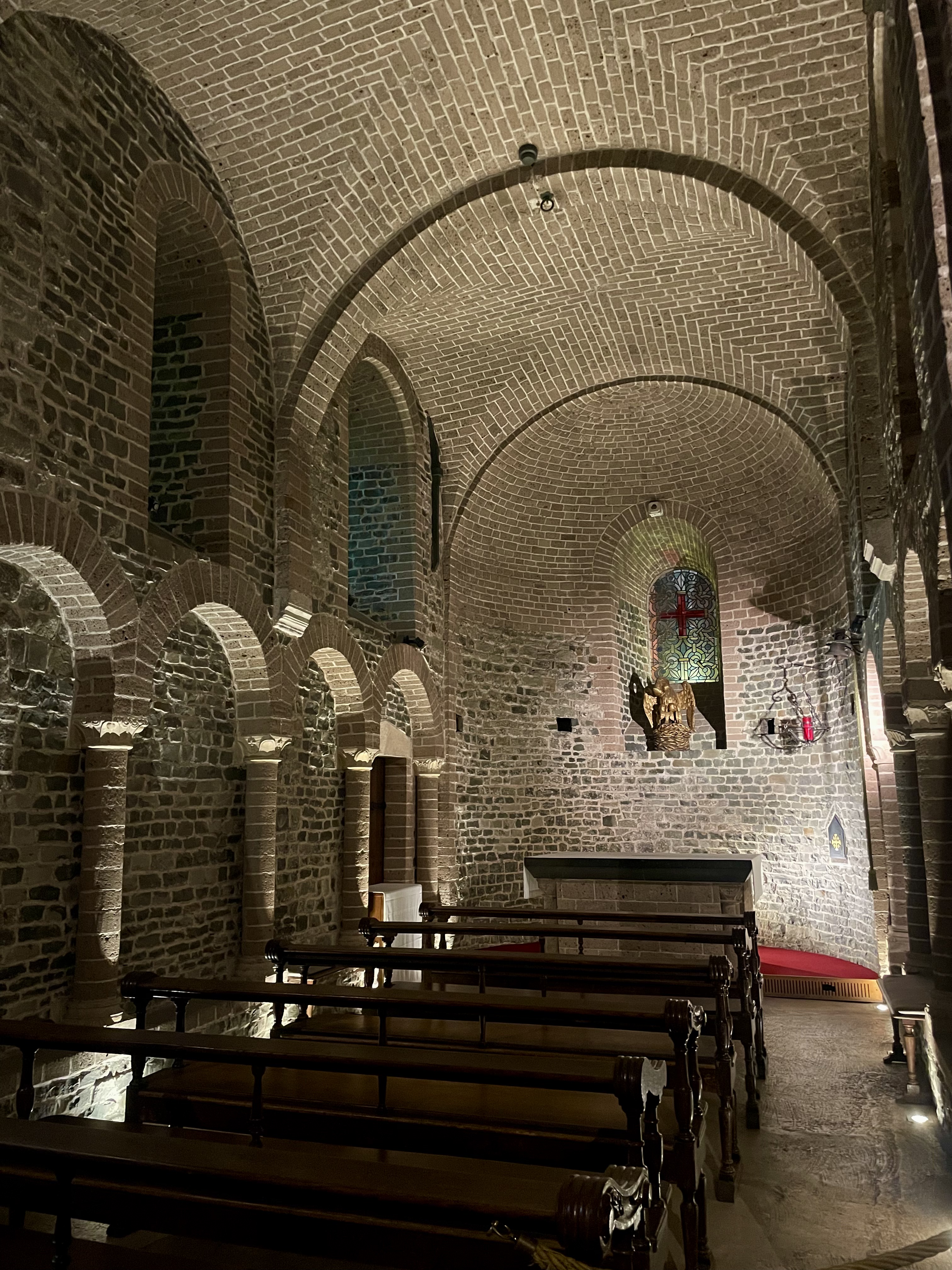
While in Bruges, I also visited the Basilica of the Holy Blood — a small, dark Romanesque chapel tucked into the corner of Burg Square. It’s home to a relic said to contain a few drops of Christ’s blood, brought back from the Second Crusade. The basilica itself has a quiet gravity to it. Upstairs, the richly decorated upper chapel glows with gold and stained glass, while downstairs, the lower chapel feels ancient and cave-like. People come from all over to see the relic — some pray, some simply observe — but whatever your beliefs, it’s hard not to feel the weight of history in that space. It’s one of the few places I’ve visited where silence really does say more than words.

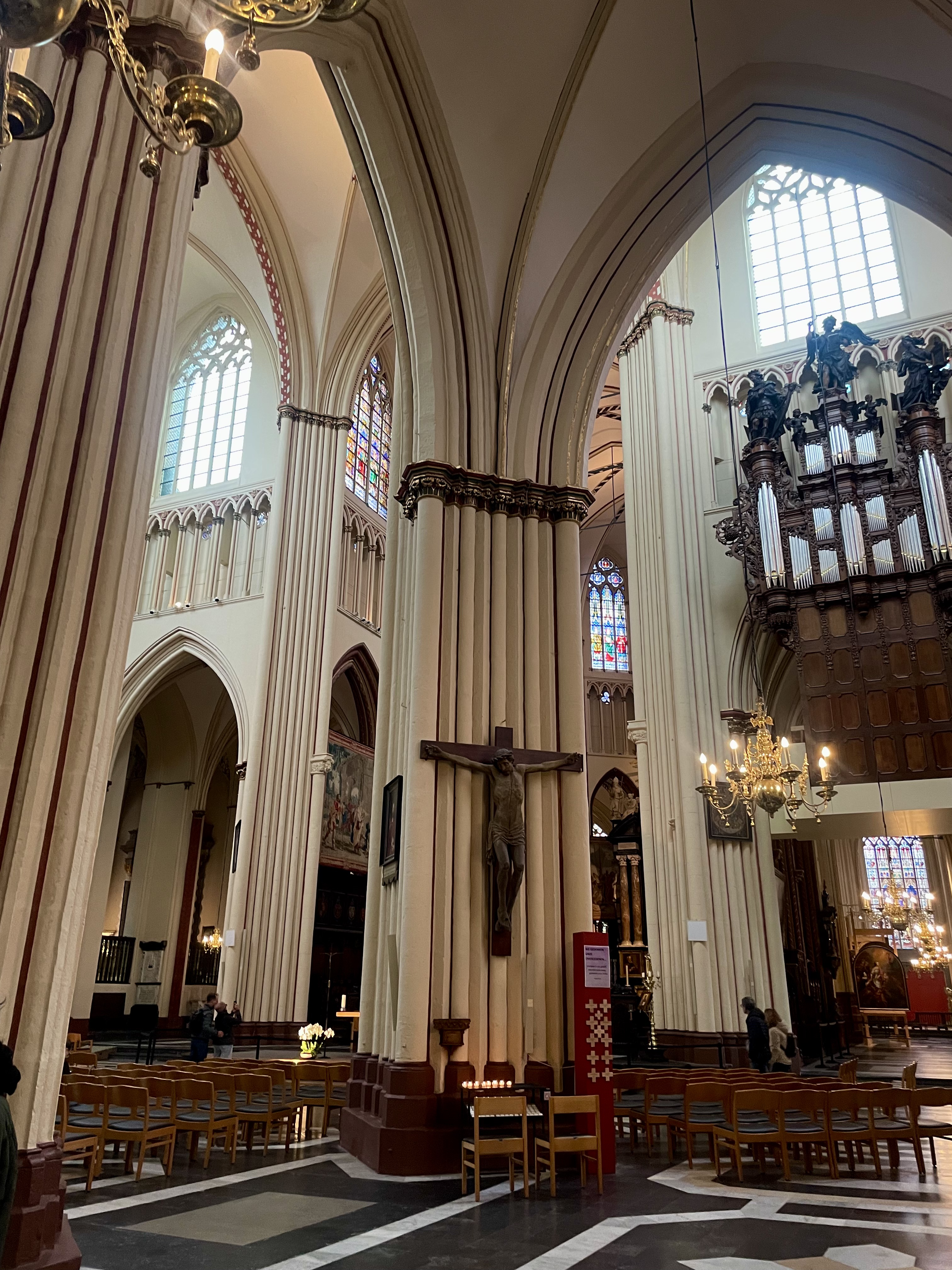
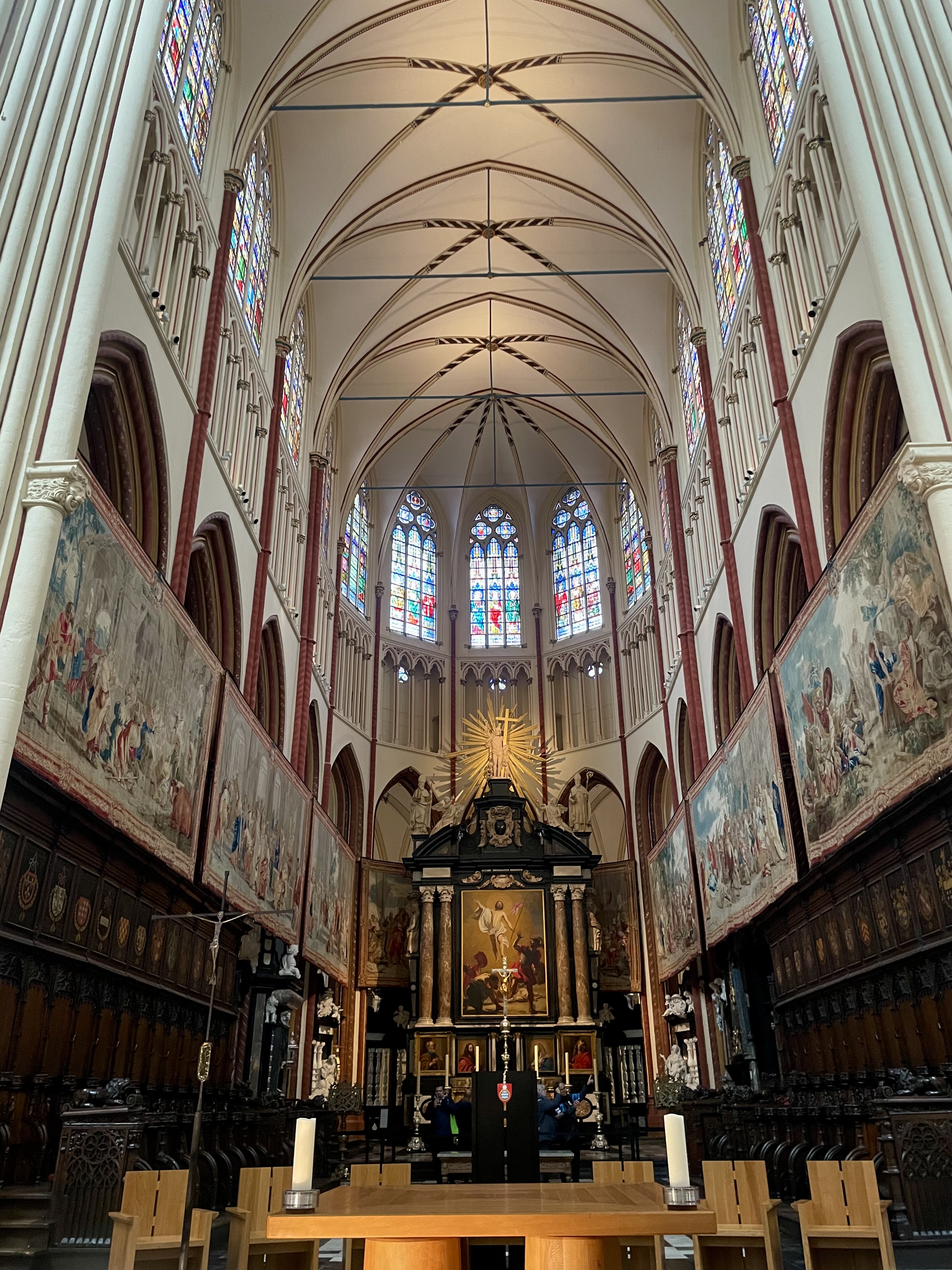
I also visited Sint-Salvatorskathedraal, Bruges’ oldest parish church and cathedral. Its architecture is a fascinating blend of Romanesque and Gothic styles, reflecting centuries of history and renovation. Inside, the cathedral houses impressive artworks, including paintings by notable Flemish masters and intricate wood carvings. The peaceful atmosphere made it a great place to pause and take in another layer of Bruges’ rich cultural tapestry.

I then stumbled upon a Christmas shop that felt like the ultimate destination for holiday decorations — the mothership of all things festive. Every corner was packed with ornaments, lights, and wreaths, creating a cozy yet overwhelming wonderland of Christmas spirit. I couldn’t resist buying a delicate lace bauble, a perfect souvenir since Bruges is renowned for its centuries-old lacemaking tradition. The city’s lace craftsmanship dates back to the 16th century, with local artisans weaving intricate patterns by hand. Lacemaking remains an important part of Bruges’ cultural heritage, celebrated in museums and boutiques throughout the town.


I also spent some quiet time at Minnewater, known as the Lake of Love. The calm waters and surrounding park create a serene escape from the bustle of the town. Legend says it’s a place where lovers’ spirits meet, adding a touch of romance to the peaceful setting. Walking along the willow-lined paths and over the old stone bridge, I could see why Minnewater is such a beloved spot — both for locals and visitors seeking a moment of calm.
The brick walls surrounding the Minnewater reminded me of Poland — specifically, the time I visited Auschwitz. It was an unexpected association, but one that surfaced quietly as I walked. There’s something about the aged red brick and the stillness of places like this that carries weight. Though Bruges is peaceful and the Begijnhof serene, memory has its own way of resurfacing in quiet moments. It didn’t overshadow my time there, but it added a pause — a reminder of past places and the thoughts they leave behind.


I also took a stroll around the Begijnhofkapel, nestled within the tranquil Beguinage. The chapel’s quiet charm is enhanced by the surrounding courtyard, where centuries-old leaning trees create a unique, almost whimsical atmosphere. It’s a peaceful spot, full of history and calm — a perfect contrast to the livelier parts of Bruges. While wandering, I noticed a nun quietly going about her day. It was a gentle reminder that this place isn’t just a historic site — it’s still a living community with traditions that continue today. That quiet presence added an extra layer of authenticity to the peaceful atmosphere.


Now, a little about the history of Bruges. The city itself rose to prominence in the 12th century as a major hub for European trade. Thanks to its access to the sea (before the waterways silted up), Bruges became a commercial and banking centre that attracted merchants, artists, and thinkers from all over the continent. In the 14th and 15th centuries, it was one of the wealthiest cities in the world. That wealth is still visible today — in the ornate guild houses, churches like Onze-Lieve-Vrouwekerk (Church of Our Lady), and the grand square around the Markt. The Belfry Tower, with its iconic silhouette, was once the city’s power centre, and climbing it gives you a clear view of Bruges’ tight medieval layout.
Eventually, Bruges’ fortunes faded. As its connection to the sea was lost, trade moved elsewhere, and the city slipped into a quieter existence — which, ironically, helped preserve its architecture. Unlike cities that were modernised or rebuilt, Bruges remained intact, and by the 19th century, it was rediscovered as a place of historical interest.
Today, Bruges is a UNESCO World Heritage Site, and while tourism has brought some buzz back into the city, its core still feels surprisingly authentic. You’ll find lace shops and beer bars, sure, but also narrow side streets barely wide enough for two people, hidden gardens, and stretches of canal that are perfectly still.
If you’re planning a trip to Belgium, I’d definitely recommend making time for Bruges. It’s one of those places that lives up to the fairytale reputation — but with enough odd corners and quiet depth to keep it grounded.