
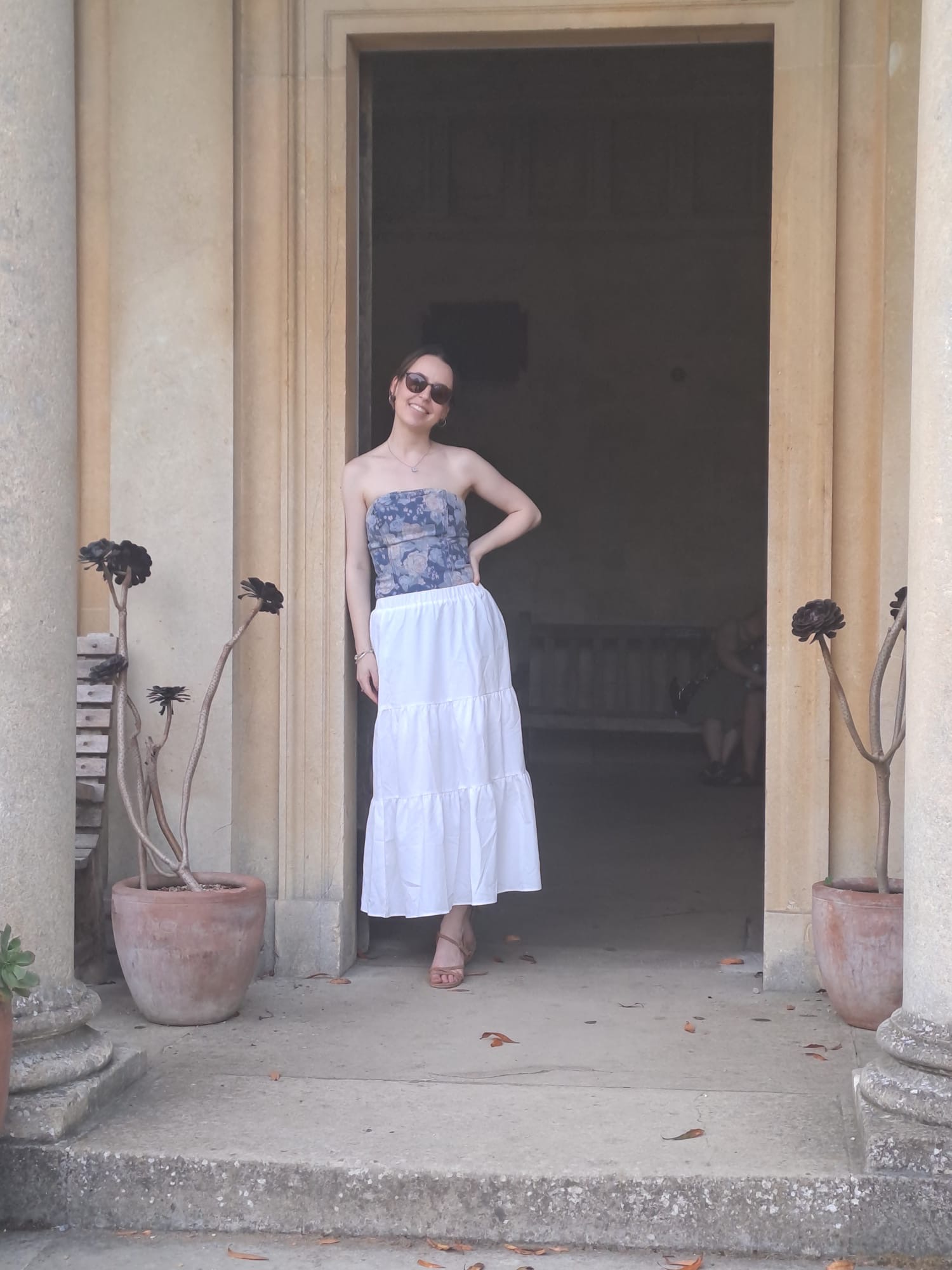
We finally managed to get away for our first holiday abroad of the year, and chose to go somewhere not quite as hot as the beachy parts of Europe – Austria and southern Germany. We landed in Munich late night, stayed near the airport, and took off on a train to Salzburg the next morning.
Salzburg is now one of my favourite cities in Europe. It has such charm and character, and beautiful buildings and scenery. We started our day by exploring the city centre. We began at the Mirabell Palace and Gardens, which as a Sound of Music fan, was so exciting to see in real life.


Next, we went to the Aldstadt (old town), saw Mozart’s birthplace, and had a delicious lunch at a restaurant in the historical centre. After that, we went home for a nap and early night.


The next morning, we travelled to Lake Konigsee in Germany, a gorgeous Alpine Llke. We started the morning by having pretzels and walking down to the lake, where the line for the boats was already forming.


We booked the boat to Salet, which took us across to the other side of the lake, where we walked to another lake called Obersee. We spent the morning at the two lakes, before coming back to Salzburg for the evening.


The next day, we spent the morning exploring more of Salzburg, specifically St Petersburg Church and the village quarters.


In the afternoon, we travelled to Fussen, Bavaria in Germany by train and headed into the village for dinner and gelato.


The next morning, we travelled to Garmisch-Partenkirchen, to go up the Zugspitze (the tallest mountain in Germany). We were picked up from the most remote train station I’ve been to – literally next to a massive field, and travelled the 2.5hrs to Garmisch.


We reached the base of the mountain and travelled up by gondola, which was much more like a rollercoaster than I expected – specifically the swinging once we reached the top! The mountain had beautiful views from its peak, and we took another gondola down to see the glaciers which were also gorgeous, albeit dry. Next, we took a cogwheel train down the other side of the mountain to Lake Eibsee, one of Bavaria’s most famous lakes.


We swam in the lake, sunbathed on the shoreline and got ice cream before making the journey back to Garmisch-Partenkirchen and then Fussen.


For our last day, we went to visit the two castles nearby Fussen in Hohenschwangau, Neuschwanstein Castle and Hohenschwangau Castle. We began the morning visiting Lake Alpsee, nearby the castles, before walking up to Hohenschwangau Castle for our guided tour. The only way to view the interior of the castle is through a guided tour or audio tour, and no interior photos are allowed.

We started by exploring Hohenschwangau Castle, which was beautiful. Built in the 12th century, the castle was originally known as Schwanstein before falling into disrepair. It was later purchased and extensively restored in the 1830s by Crown Prince Maximilian of Bavaria, who became King Maximilian II. He transformed the medieval ruins into the romantic Neo-Gothic castle we see today. The castle became the childhood home of his son, King Ludwig II, who would later build the famous Neuschwanstein Castle just across the valley.


We started by exploring Hohenschwangau Castle, which was beautiful. Originally built in the 12th century as Schwanstein Castle, it fell into disrepair before being purchased and restored in the 1830s by Crown Prince Maximilian of Bavaria, who later became King Maximilian II. The castle became the childhood home of his son, King Ludwig II, who would later build the much more famous Neuschwanstein Castle just across the valley.
Unfortunately, we were unable to take the horse-drawn carriage up to the castle, so we made the walk to Neuschwanstein Castle instead. The castle was absolutely breathtaking. Construction began in 1869 at the request of King Ludwig II, who envisioned it as a romantic retreat inspired by the medieval castles and German legends he loved. Rather than being built as a defensive fortress, Neuschwanstein was Ludwig’s idealised vision of a medieval castle, with elaborate interiors inspired by German mythology and the operas of his friend and favourite composer, Richard Wagner.
My favourite room was the Throne Hall, which was incredibly ornate. Its stunning mosaic floor is made up of more than 1.5 million tiny pieces of natural stone and depicts the earth surrounded by plants and animals. The room was designed to resemble a Byzantine church, with an impressive chandelier and elaborate golden details. Interestingly, despite being called the Throne Hall, there is no throne, as the one Ludwig commissioned was never completed before his death.
Sadly, Ludwig never saw Neuschwanstein completed. He lived in the castle for just six months before his mysterious death in 1886, aged 40. By this point, Ludwig’s behaviour had become increasingly erratic, and a medical commission declared him mentally unfit to rule. However, the circumstances surrounding his removal from power remain controversial, with historians questioning whether his advisors had already decided that he was unfit to rule and whether the medical assessment was influenced by political considerations. He was removed from power and placed under the care of his uncle, Prince Luitpold, who became regent. Just one day after his deposition, Ludwig went for a walk with his psychiatrist, Dr Bernhard von Gudden, along the shores of Lake Starnberg, near Munich. That evening, both men were found dead in the shallow waters of the lake. Ludwig’s official cause of death was drowning, but the circumstances surrounding their deaths remain a mystery. Some theories suggest that Ludwig killed von Gudden before taking his own life, while others believe that the two men may have been murdered. With no witnesses and no definitive evidence establishing exactly what happened, the truth remains unknown.
Ludwig’s younger brother, Otto, also suffered from severe mental illness and was declared unfit to rule. Following Ludwig’s death, Otto technically became King of Bavaria, but he was unable to govern, so their uncle Luitpold continued to act as regent. Otto remained king in name until his death in 1916, although he spent much of his life under medical supervision and away from public life.
Despite Ludwig’s wish that Neuschwanstein remain a private residence, his family opened the castle to visitors just a few weeks after his death. The enormous costs of his building projects likely played a role in the decision, although it is debated whether this was specifically intended to help pay off his debts. Much of the interior was also still unfinished when the castle opened to the public.
Today, Neuschwanstein is one of Germany’s most famous landmarks and is often described as a fairytale castle. Its distinctive appearance is also said to have inspired the design of Sleeping Beauty Castle in Disney’s films and theme parks.


We finished our day by walking up to the Marienbrücke viewpoint, which was incredibly busy, but it was easy to see why so many people make the journey. The bridge offers a spectacular view of Neuschwanstein Castle perched dramatically against the backdrop of the Bavarian Alps. Despite the crowds, the scenery was absolutely worth it and provided the perfect final view of the castle before we headed back down.


For our last night on holiday, we went to an Italian restaurant which was lovely. We had such a wonderful holiday, I feel so lucky to get to travel to such beautiful places!

Leave a Reply