
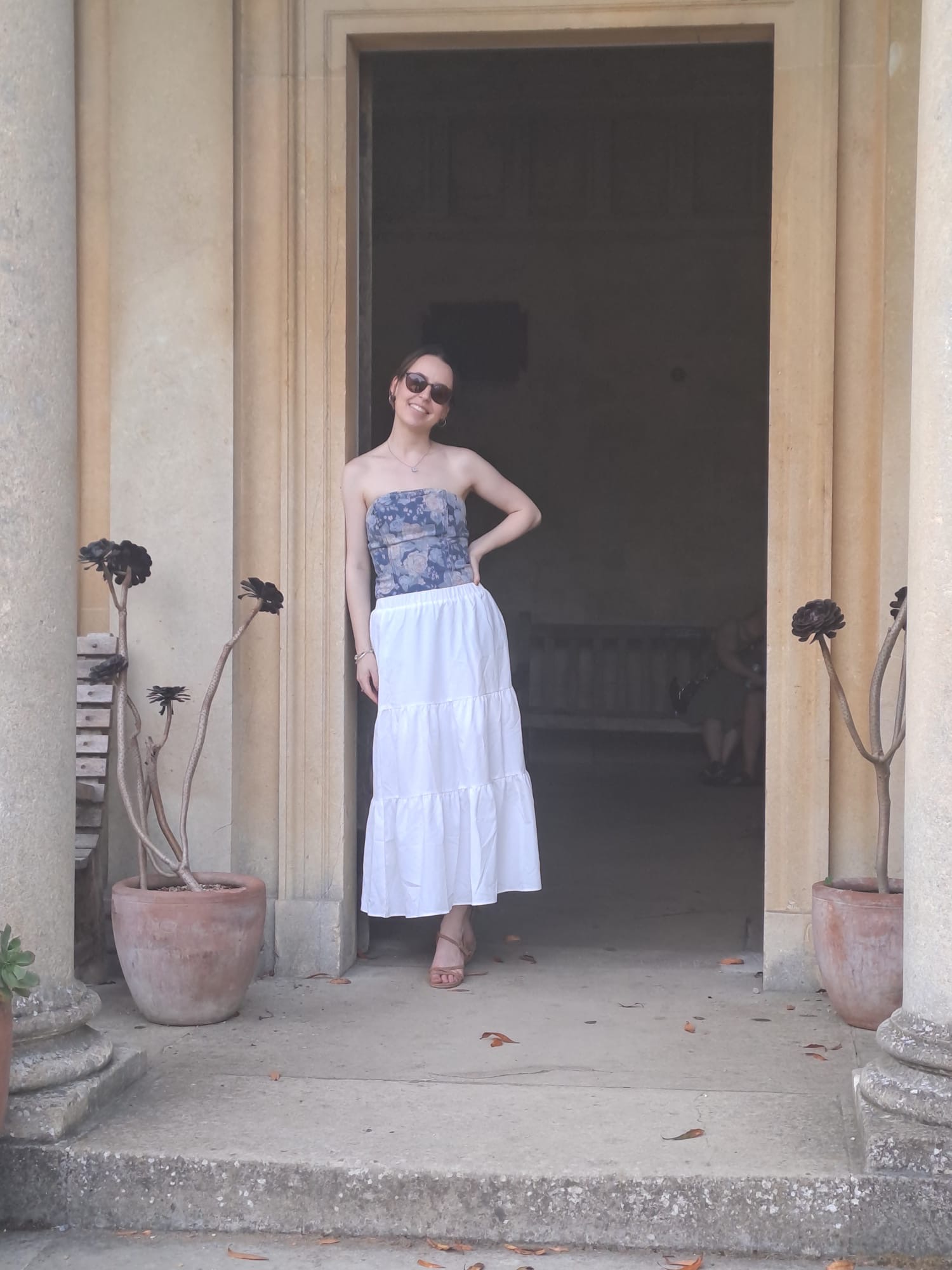
There’s nothing I love more than exploring a castle. The history, the intrigue, the beautiful architecture and décor, I love it all. I’ve always been a fan of royal families ever since I learned what a princess was, and I love getting to see the kind of life they lived. One of my favourite things about the UK is the abundance of historical buildings, castles and gardens, so I made it my mission to visit as many as I could while we live in South East England.
We have a National Trust membership, which I highly recommend to anyone living in England who enjoys historical castles, houses and gardens. There are so many incredible places to visit, and having the membership has made it so much easier to explore them.


Our first visit this year was to Herstmonceux Castle, about 20 minutes from our house. The castle was built in 1441 by Sir Roger Fiennes, who was Treasurer to King Henry VI. It’s one of the oldest brick buildings of its kind in England, and I absolutely loved the red brick against the surrounding greenery. The castle also has a few resident ghosts, including the famous Headless Drummer, who is said to walk the battlements at night beating his drum. There are a few different stories about who the drummer actually was, but it has been lost to history. We explored the castle interiors and courtyard before wandering around the surrounding gardens and grounds. We also got to see a falconry display after exploring the grounds, which was very cool and interesting! Our trip to Herstmonceux made for such a lovely spring day out, especially with everything starting to bloom.


Next, we went to my favourite castle I’ve visited in this part of the country, Arundel Castle. Built in 1067 by Roger de Montgomery, Earl of Shrewsbury, it has been home to the Earls of Arundel and the Dukes of Norfolk for almost 1,000 years. It has played a huge role in English history, including during the English Civil War when it was besieged and badly damaged. Queen Victoria and Prince Albert even stayed at the castle during their visit to Arundel in 1846, with the room they stayed in still accessible to the public.


The estate itself is massive, with a moat, sprawling hills, a huge vegetable garden, a conservatory, ponds, fountains and flowers everywhere. The interior of the castle is equally as impressive, if not more so, with grand rooms filled with paintings, tapestries, furniture and other historic pieces. We chose to do the complete tour, so got to venture up the beautiful staircase to see the upper bedrooms. It has a gorgeous ornate library, the Fitzalan Chapel, and a grand hall with huge stained-glass windows and a lion skin rug. I honestly could have spent hours wandering around here, and it is definitely somewhere I would go back to.


After this, we explored Bodiam Castle, one of the most recognisable medieval castles in England. It was built in 1385 by Sir Edward Dallingridge during the Hundred Years’ War, supposedly to help defend the area against a possible French invasion. Although the interior is now mostly in ruins, the exterior is incredibly well preserved, with its towers, battlements and moat still making it look exactly like the stereotypical castle you would draw as a child. It’s so easy to stand there and imagine how impressive it must have been when it was actually lived in.


The castle has had a pretty eventful history, eventually falling into ruin before being restored and cared for over the years, and is now owned by the National Trust
Next was Nymans, in West Sussex. The estate dates back centuries, but the house and gardens we see today were largely developed by the Messel family from the late 19th century onwards. The family transformed the estate into a beautiful country home, while also creating the incredible gardens that Nymans is now famous for.


We enjoyed exploring the grounds as well as the interior of the manor, before stopping for lunch at the on-site café. There are so many beautiful flowers throughout the gardens, and I decided we would do a little colour walk, taking photos of as many flowers of one colour as we could find. We ended up continuing this throughout many of our other garden visits, and it became a little tradition of ours.


Sissinghurst Castle Garden was our next visit, in Kent. It was another beautifully kept estate with perfectly manicured gardens, but what makes Sissinghurst particularly interesting is the people behind it. The estate was bought by writer Vita Sackville-West and her husband Harold Nicolson in 1930, when much of it was in a pretty sorry state. They spent years transforming the overgrown grounds into the gardens we see today.


The gardens are divided into different ‘rooms’, each with its own style, colours and flowers. The White Garden and Rose Garden were some of my favourites, and I loved wandering through all the different sections and seeing how different each one felt. You can also climb the Elizabethan tower, which gives you a beautiful view over the gardens and the surrounding countryside.


It’s strange to think about how much history happened here when you look at it now. During the Seven Years’ War, Sissinghurst was used as a prison for thousands of French sailors, and during the Second World War it became home to members of the Women’s Land Army. Now, it’s one of the most beautiful gardens I’ve visited, which feels like quite a transformation!


Our most recent castle visit was to Scotney Castle, again in Kent. This is a massive estate with two castles — one still standing and one in ruins. The old medieval castle sits in the middle of a moat and has been transformed into what is now a beautiful, almost fairytale-like garden feature, while the newer Victorian country house sits further up the hill.

The old castle dates back to the 14th century, although much of the romantic ruin we see today was intentionally created later. I loved walking around the grounds and seeing the castle from all the different viewpoints, especially with the water and flowers surrounding it.


One of my favourite features was the little cat fountain, which was commissioned by Elizabeth ‘Betty’ Hussey, who absolutely loved cats. The fountain features a stone cat reaching its paw towards the water, and there are lots of other little cat references throughout the estate. Obviously, as a cat lover myself, this was one of the things that immediately caught my attention.


I feel like we’ve barely scratched the surface of the castles and gardens around South East England, but these visits have definitely made me appreciate just how much history there is right on our doorstep. There is something so special about being able to spend a sunny afternoon wandering around a centuries-old castle, imagining the people who once lived there, before ending the day with a cup of tea and a walk through the gardens. And I’m definitely not finished yet — there are still plenty more castles on my list when we explore more of the UK.