
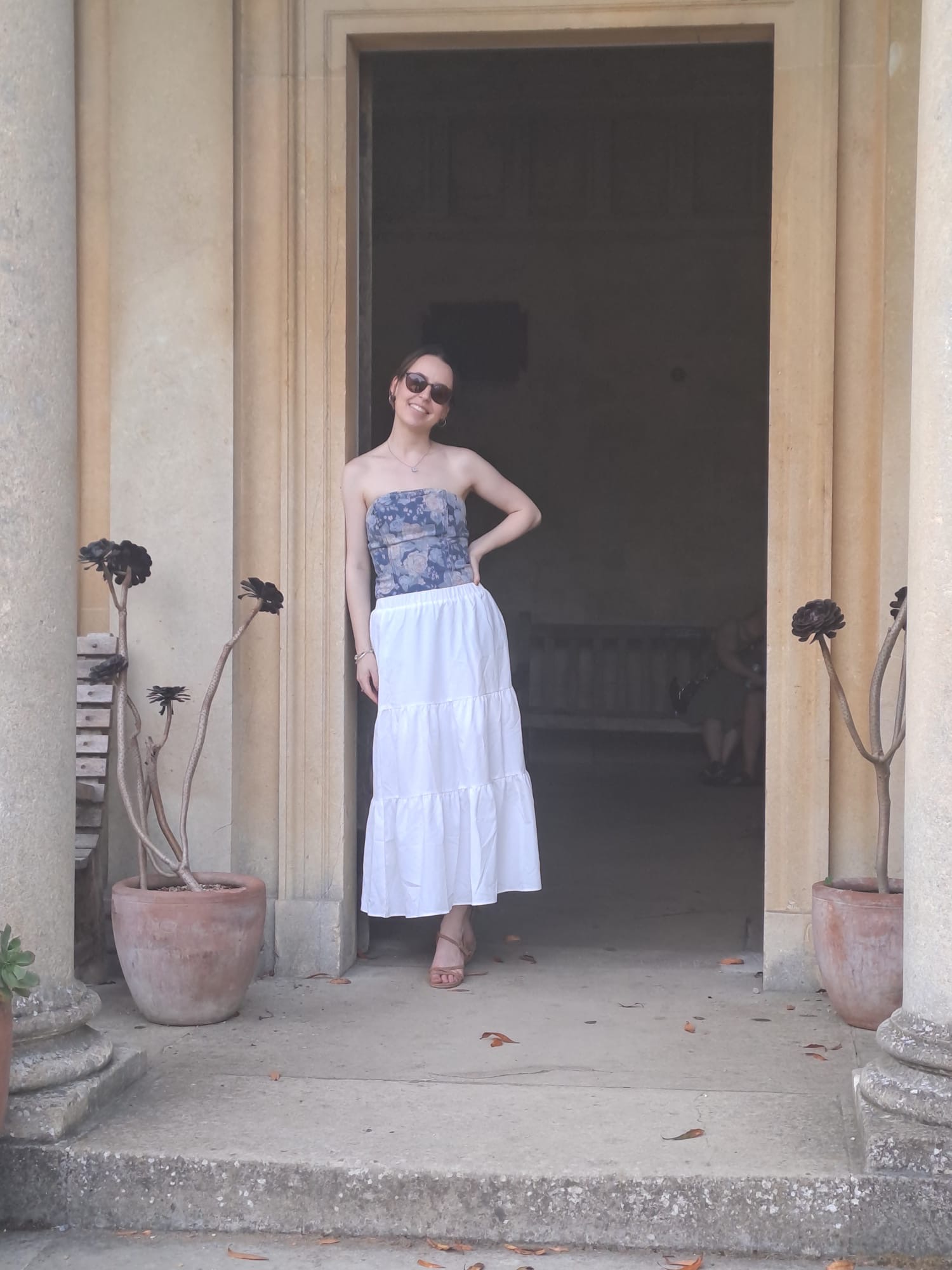
I’ve always been fascinated by history — especially stories of queens, castles, and dynasties. But I never imagined those stories would be mine. After countless late nights and deep rabbit holes, I have traced my ancestry back to monarchs, noble houses, and historic power players across England, Ireland, Scotland, and Central Europe. These aren’t just names in history books — they are my blood relatives.
Paternal Grandmother: Tudor Ties and the Bold-Boleyn Connection
One of the most personally fascinating connections in my family tree is my relation to Anne Boleyn. I have always found her story to be heartbreaking, and it is even more heartbreaking to know she is my descendant.
- Margaret Boleyn (née Le Boteler), my 14th great-grandmother, was Anne Boleyn’s aunt.
- Margaret married Sir Richard Bold (1462–1528), making their daughter Lady Margaret Elizabeth Boleyn a first cousin to Anne Boleyn herself.
This places me as a first cousin, 14 times removed, to Anne Boleyn and 15 times removed to her daughter Queen Elizabeth I — both pivotal figures in English history.
Through this line, the Tudor court’s intrigue, ambition, and drama flow into my heritage.


Paternal Grandfather: McGruddy Clan
An important branch of my family tree through my paternal grandfather is the McGruddy clan, also spelled McGrady and McGrudy. From the limited information I could find, our earliest ancestor Michael McGruddy (or Michl McGrudy) hailed from Molville in County Donegal, Ireland, and lived during the 17th century. Rooted in this northern region, the McGruddy’s were influential local leaders, known for their strong ties to Gaelic traditions and community governance.
County Donegal’s rugged landscape and history of clan-based society shaped the McGruddy legacy, with the family playing key roles in regional defense and local politics. While McGruddy is not a widely known noble or aristocratic surname, the family has longstanding roots in Donegal’s rural communities and may be linked through marriage or alliances to local Gaelic nobility or clans.
This connection adds a distinct Irish heritage branch, grounded in the unique culture and history of Donegal, complementing the broader tapestry of my family’s noble and royal lineage.
Maternal Grandmother: Mary Boleyn, The Other Boleyn Sister
Interestingly, I am more deeply connected to the Boleyn line than my initial research showed. I am directly descended from Margaret Boleyn on my paternal grandmother’s side – Anne Boleyn’s aunt, and her sister Mary Boleyn through my maternal grandmother. Mary Boleyn is my 17th great grandmother, and a fascinating figure in Tudor England.
Known namely as the sister of Anne, Mary lived at the very heart of one of history’s most turbulent royal courts. Though overshadowed by Anne’s tragic rise and fall, Mary’s story is equally intriguing. She was known to have been a mistress to Henry VIII before his marriage to Anne, placing her in close proximity to the king and the powerful political forces of the time. Her life reflects the precarious position of women in Tudor society—navigating influence, survival, and legacy in a male-dominated world. Tracing my ancestry back to Mary Boleyn is not just a connection to a distant past; it is a window into the intimate realities of a time when family alliances and court intrigues shaped the fate of nations. This rare and extraordinary link enriches my family history and reminds me of the enduring echoes of those who lived centuries before me, whose choices and experiences helped weave the fabric of British history.
Both Boleyn sisters struggled immensely with their positions at court—navigating dangerous political intrigues, intense rivalries, and the constant pressure to maintain favour with the king. It’s fascinating and surreal to realize that the stories I’ve watched unfold on screen in movies and TV shows, the same stories I’ve read about in history books, are not just distant tales but part of my own family history. Being directly related to such iconic figures who played pivotal roles in one of the most dramatic and turbulent periods of English history feels almost unreal. It makes their struggles and triumphs feel more personal, and it deepens my appreciation for the complexities of their lives beyond the headlines and royal gossip.

Tudor Court Connections: King Henry VIII
Through my maternal grandmother’s family, I am also distantly related to King Henry VIII. This connection comes through the Boleyn line, and Henry’s ancestry being traced back to Edward I, another of my relatives who I will discuss later. This makes Henry VIII my distant cousin many times removed, highlighting the complex web of Tudor-era intermarriages.
Henry VIII is one of England’s most famous and controversial monarchs. His reign (1509–1547) was marked by profound political and religious upheaval, including the English Reformation, which led to the Church of England breaking away from the authority of the Pope and the Roman Catholic Church. Henry’s quest for a male heir drove much of his personal and political life, including his six marriages, two of which—Anne Boleyn and Catherine Howard—ended in execution.
His decisions reshaped the course of English history, from strengthening royal power to altering the nation’s religious landscape forever. Despite his turbulent reign, Henry VIII’s legacy endures, and knowing I share ancestry with him connects me directly to this pivotal era of history, filled with drama, ambition, and transformation.
Adding an intriguing layer to this connection is Henry Carey, 1st Baron Hunsdon, my direct ancestor. He was the son of Mary Boleyn — Anne Boleyn’s sister — who was also known to have been a mistress of Henry VIII before his marriage to Anne. Some historians speculate that Henry Carey may have been Henry VIII’s illegitimate son, although there is no definitive proof. Whether or not this is true, Henry Carey’s prominent role in Elizabeth I’s court and his close ties to the royal family deepen my family’s historic connection to the Tudor dynasty. This possibility means I might be not only a distant cousin but also a direct descendant of one of England’s most famous monarchs, making the Tudor legacy feel all the more personal and alive.


Lady Katherine Carey and Husband Charles Howard, 1st Earl of Nottingham
Through Mary Boleyn, I am naturally related to her granddaughter, Lady Katherine Carey, Countess of Nottingham. Lady Katherine was not only a noblewoman by birth but also Queen Elizabeth I’s first cousin, and one of her closest and most trusted ladies-in-waiting. Katherine was deeply connected to the Tudor dynasty, which helped secure her place within Elizabeth’s intimate inner circle.
Katherine’s relationship with Elizabeth was marked by profound loyalty and companionship. Serving at court, she was more than a mere attendant; she was a confidante who shared in the queen’s daily life, political challenges, and personal struggles. Elizabeth valued Katherine’s discretion and support during the turbulent years of her reign, and their bond went beyond duty to genuine friendship.
Historical accounts suggest that when Lady Katherine Carey died, Queen Elizabeth I was deeply affected—some say the queen was “never the same” afterward. Losing such a trusted companion left a void in Elizabeth’s court and heart, highlighting just how close and important Katherine was in the queen’s life. This poignant loss illustrates the human side of a monarch often portrayed as distant or unyielding.
Through Lady Katherine Carey, my ancestry offers a unique window into the intimate world of Elizabethan England, connecting me personally to the strength, vulnerability, and complexities of one of history’s most iconic queens.
Lady Katherine’s husband was Charles Howard, 1st Earl of Nottingham (1536–1624), a pivotal figure in Elizabethan England and a trusted Privy Councillor to Queen Elizabeth I. As Lord High Admiral, Howard played a crucial role in defending England from the threat of the Spanish Armada in 1588, leading the English fleet to one of history’s most celebrated naval victories. His strategic leadership and unwavering loyalty to the crown not only shaped England’s naval supremacy but also secured his place among the Queen’s closest advisers. Howard’s influence extended beyond military matters; as a key member of the Privy Council, he helped guide the political and diplomatic direction of the realm during a turbulent era. Howard’s legacy of leadership, loyalty, and tough political decisions ties me to a lineage shaped by courage and volatile times.
To be descended from such a formidable statesman and defender of the nation connects me deeply to a legacy of service, courage, and leadership at the highest levels of English history.


Irish Nobility and Butler Legacy
My maternal grandmother brings in a legacy of Irish nobility, most notably the Butler family, one of Ireland’s most influential dynasties.
I descend from Sir Walter Butler of Garryricken (1650–1700) — my 11th great-grandfather — who belonged to the Ormond branch of the Butler family. The Butlers were powerful landowners, military leaders, and political influencers in both Ireland and England. Their lineage includes James Butler, 1st Duke of Ormond, Lord Lieutenant of Ireland and ally of the English Crown.
Through the Butlers’ extensive noble connections and intermarriages, this line also links me back to English royal bloodlines, namely my descent from King Edward I and other medieval monarchs.
Through this noble Irish line, I am directly related to a family that stood at the crossroads of English and Irish governance.
The Butlers played key roles in shaping Irish history as loyal supporters of the English Crown while also managing their own vast estates and influence in Ireland. Their position required delicate diplomacy between local Irish interests and English authorities, often acting as intermediaries during times of conflict and change. This legacy reflects a heritage of leadership, resilience, and political acumen deeply woven into both Irish and British history.


Gerald FitzGerald, “The Wizard Earl”: A Legendary Irish Ancestor
One of my most intriguing ancestors is Gerald FitzGerald, 11th Earl of Kildare (1528–1585), known as “The Wizard Earl.” A scholar, mystic, and political figure, Gerald’s legacy blends nobility with Renaissance knowledge and folklore.
Descended from both Norman barons and Gaelic kings, Gerald’s mystical reputation and legendary stories are a living part of my heritage — a reminder that nobility can mean knowledge, curiosity, and vision as much as crowns and power.

Sir Francis Drake: The Explorer in My Blood
Among my maternal grandmother’s English lines is a direct connection to Sir Francis Drake, through Sir Knight Lord John Drake, the famed naval commander and explorer whose bold voyages helped define the Elizabethan era and expand England’s influence across the globe. Drake’s daring circumnavigation of the world, his pivotal role in the defeat of the Spanish Armada, and his relentless pursuit of new territories and trade routes embody a spirit of adventure and resilience that resonates deeply within my family history. His legacy is not only one of naval mastery but also of a relentless drive to push boundaries and challenge the unknown—qualities that I feel echo through my own lineage. In a beautiful full-circle moment, a street in my hometown in New Zealand is named after Sir Francis Drake, a reminder of this historic connection and the spirit of exploration that courses through my heritage.

John Howard, 1st Duke of Norfolk: Military Leader and Patriarch of a Noble Line
Among my ancestors is John Howard (1366–1437), 1st Duke of Norfolk, a distinguished English nobleman and military commander. A loyal supporter of Kings Henry IV and Henry V, Howard played a pivotal role in the famous Battle of Agincourt in 1415, commanding the English right wing and contributing significantly to England’s celebrated victory against the larger French army. His unwavering service earned him elevation to the dukedom, laying the foundation for the powerful Howard dynasty that shaped English nobility for centuries. Beyond the battlefield, Howard served as a royal advisor and Lord Admiral, deeply involved in the politics and court life of his era. Knowing that I am descended from such a formidable figure brings a profound connection to England’s medieval history and its legacy of loyalty, leadership, and nobility.
Maternal Grandfather: De Warrene Connection and Scottish Clans
On my maternal grandfather’s side, my ancestry reaches deep into both Scottish clan tradition and medieval royal lineage, notably through the Clan McLeod and the de Warenne family, which connects me to the Plantagenet dynasty.
I descend from Laurence de Warenne (1539–1623) of Cheshire.
Laurence’s ancestor, Hamelin Plantagenet, was the illegitimate half-brother of King Henry II, founding the de Warenne line.
This connection links me (again) directly to King Edward I of England (1239–1307), known as “Longshanks,” making him my 20th great-grandfather.
Edward wasn’t just any king; he was a pioneering legal reformer who laid crucial foundations for English common law, a relentless warrior whose military campaigns extended England’s influence over Wales and Scotland, and a visionary patron who commissioned some of Britain’s most iconic and enduring castles. His reign left a lasting legacy that shaped centuries of English law, warfare, governance, and culture.


Also on my maternal grandfather’s side, my ancestry traces back to Scotland, with ties to the Clan McLeod — a storied Highland clan rooted in the Hebrides and the Isle of Skye.
The McLeods are divided into two main branches: the MacLeods of Dunvegan and Harris and the MacLeods of Lewis. Both descend from Leod, a 13th-century Norse-Gaelic chieftain believed to be related to Olaf the Black, King of the Isle of Man and the Isles. This rich Norse-Gaelic heritage reflects the complex history of Scotland’s western isles. I am descended from the MacLeods of Dunvegan and Harris, who inhabit the historic seat at Dunvegan Castle on the Isle of Skye. Dunvegan Castle is the oldest continuously inhabited castle in Scotland and has been the stronghold of the MacLeods of Dunvegan and Harris since the 13th century.


Known for their fierce loyalty and leadership, the McLeods were prominent landowners and clan chiefs who played key roles in the often turbulent Highland politics. Their traditional motto, “Hold Fast,” encapsulates the clan’s enduring spirit and resilience. They played major roles in Scottish resistance, Highland migrations, and the Jacobite uprisings.
This Scottish connection adds another layer to my family story, linking me to a culture defined by strength, tradition, and the rugged beauty of the Highlands and islands..
These bloodlines represent leadership, resistance, and heritage deeply tied to Scotland’s history.
The House of Stewart: Distant Cousin to Mary, Queen of Scots
Through my maternal grandfather’s clan connections, I share blood with the House of Stewart, Scotland’s long-reigning royal dynasty. This lineage traces back to Robert II of Scotland, the first Stewart king, who is my direct descendant. This connection is made through Walter Stewart of Innerdunning, my 13th great grandfather, and the Stewarts in my family who resided at Cambusnethan (Lanarkshire) and Balquhidder (Perthshire). These were historically significant areas for Stewart landholdings, often linked to noble or laird families stemming from royal Stewarts.
This Stewart connection makes me a distant cousin to the remarkable Mary, Queen of Scots. Our shared ancestry places me in kinship with one of the most iconic and tragic figures in Scottish and British history. Mary’s life was marked by political intrigue, religious conflict, and dynastic struggles that ultimately led to her imprisonment and execution — an event made even more striking given that one of my other ancestors, Charles Howard, 1st Earl of Nottingham, supported her execution in Queen Elizabeth I’s court. This bittersweet familial web connects me to both sides of a dramatic royal narrative.
Being part of the Stewart bloodline ties me to centuries of Scottish royal ambition, resilience, and cultural pride, with roots in both Highland clans and European courts. It’s a legacy of strength and sovereignty that continues to shape how I understand my heritage today.
The Stewart part of my ancestry represents centuries of Scottish resilience, royal ambition, and cultural identity — tying my heritage to the thrones of both Scotland and England


Central European Ancestry: Noble Echoes from Austria-Hungary and Bavaria
My ancestry also traces deeply into Central Europe — particularly regions of the modern Czech Republic, Slovakia, and Bavaria, once unified under the vast and culturally complex Habsburg Empire. Within this imperial world, my ancestors were part of a multicultural fabric that combined nobility, diplomacy, faith, and governance.
Among them was Rabbi Eleazer Teicher of Hainsfarth, my distinguished Bavarian Jewish ancestor. As a respected spiritual leader and community intermediary, Rabbi Teicher played a vital role in mediating between Jewish communities and imperial authorities. In his lifetime, rabbis of such stature often held semi-diplomatic roles, negotiating on behalf of their congregations and maintaining regular contact with royal administrators and noble houses within the Habsburg structure.
His position would have involved working closely with regional counts, bishops, and occasionally even with members of the imperial court, especially in matters concerning religious law, taxation, or protection of Jewish rights. This placed my ancestor not just at the heart of Jewish religious life, but also at the crossroads of imperial politics and interfaith negotiation.
This heritage reminds me that my roots lie not only in royal bloodlines but also in the intellectual, spiritual, and diplomatic leadership that sustained communities through some of Europe’s most turbulent centuries — shaping the Habsburg lands from within.


Royal Bloodlines: Monarchs in My Family Tree
To sum up, over the course of my research, I uncovered a remarkable web of ancestral links that span dynasties, kingdoms, and centuries. My lineage doesn’t just brush up against royalty — it flows through it. Here are some of the monarchs and historic houses that I am directly descended from:
- King Edward I of England – my 20th great-grandfather
- Anne Boleyn – my first cousin 14 times removed
- Queen Elizabeth I – my first cousin 15 times removed
- Mary Boleyn – My 17th great grandmother
- King Henry VIII – my distant cousin many times removed, or possibly my direct ancestor through the Carey line.
- Lady Katherine Carey, Countess of Nottingham – 14th great grandmother
- Charles Howard, 1st Earl of Nottingham – Distant cousin and naval hero
- Gerald FitzGerald “The Wizard Earl,” – my 12th great grandfather
- John Howard, 1st Duke of Norfolk – my 17th great grandfather
- Robert II of Scotland – My 18th great grandfather
- Mary, Queen of Scots – my distant cousin
Below is a very simplified tree showing my main royal ancestry:

Why This Matters to Me
These connections don’t just link me to royalty — they link me to real people who shaped the world I live in.
These names, once only familiar from textbooks and documentaries, now represent the lived legacy of my own family. My genealogy is extraordinarily rare—an exceptional convergence of some of Europe’s most prestigious and historically significant noble and royal families. Far beyond the typical distant royal ancestor found in many family trees, I can trace direct descent from King Edward I of England, Mary and Margaret Boleyn, multiple ties to Anne Boleyn, all through both my maternal and paternal grandmothers. My lineage also encompasses the powerful de Warenne and Butler families, notable Scottish Stewarts, Irish Earls, and distinguished Jewish rabbinical lines from Central Europe. This remarkable combination of deeply documented noble bloodlines, spanning multiple countries, cultures, and centuries, is incredibly uncommon—perhaps one in tens of thousands, if not rarer. It represents a unique living link to the intricate and often intertwined histories of Europe’s most influential dynasties.
This historical investigation has made me wonder how much of who I am is shaped by those who came before me.
Is my instinct to lead something inherited from Queen Elizabeth I, whose strength defined an era?
Is my stubbornness a reflection of Mary, Queen of Scots, who stood her ground through impossible circumstances?
My love for the piano — could that trace back to Charles Howard, a nobleman and composer?
My passion for poetry feels at home with Anne Boleyn, who surrounded herself with the written word.
My constant reading — perhaps that finds its roots in Lady Katherine Boleyn, raised in a world where learning and literature mattered.
Even my love of fantasy might have a lineage, passed down from Gerald FitzGerald, the “Wizard Earl,” whose life blurred the lines between history and legend.
And when I travel — when I leave behind the familiar to explore somewhere new — maybe I’m just following in the footsteps of Sir Francis Drake.
My writing, especially the storytelling I pour into my blog, could be part of the legacy of the Stewarts of Balquhidder, a family steeped in Highland tradition, music, and oral history.
My desire to care for animals may come from the Butlers, who valued animal husbandry and stewardship, reflecting a deep respect and responsibility for the natural world passed down through generations.
These connections might be imagined, or they might be something real. The bottom line is these names are no longer just historical figures — they’re family, and their blood runs in my veins.